
Next to the Chiefs Interview: Linn Rix Jäpel, Chief of Staff at Statista R
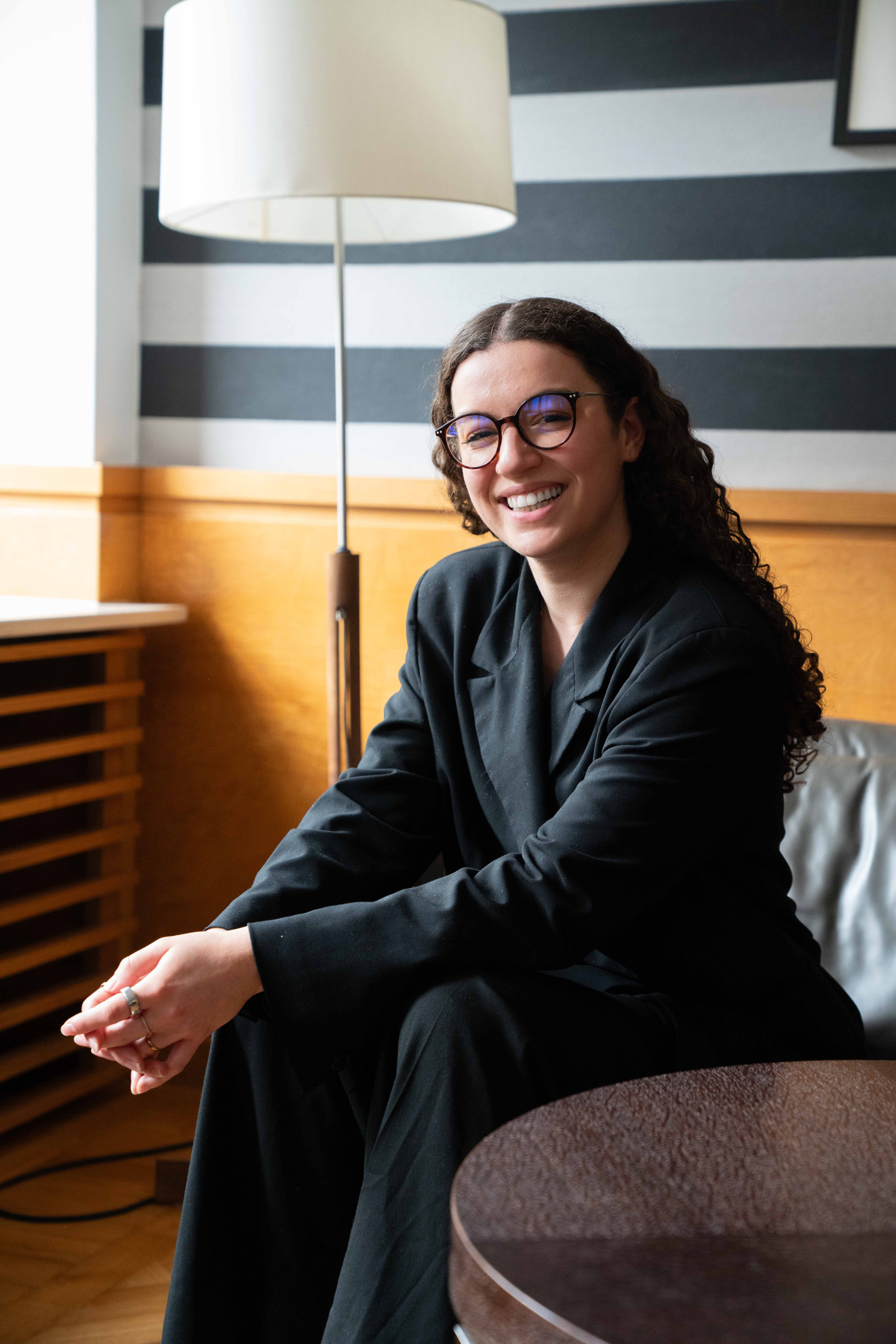
Linn Rix Jäpel has been Chief of Staff at Statista R, the division of Statista GmbH specialising in global company rankings, for just under a year. She works directly alongside the division's CEO and describes her role as an "extended pair of hands and brain". In a conversation at her Hamburg office, she talks about what her role looks like day to day, how she structures her time, and what it takes to create real impact.

Julia: If you had to describe Statista R in a nutshell:
What do you do and how big are you?
Linn: Statista is a global Data-as-a-Service company with around 1,100 employees. Statista R is a standalone division with its own business model, made up of roughly 200 people. Our core business is recognising companies, hospitals, and brands through best lists and rankings, which we publish with major media partners such as TIME, Forbes and Newsweek.
How would you best describe your role as Chief of Staff?
The simplest way to put it: I'm the"extended pair of hands and brain" for our CEO. My core job is to support him across whatever comes up, so that he has more leverage and can focus more on strategic topics.
Within Statista, I'm in a somewhat unique position, because within Statista R, I cover a very broad range of areas: from HR topics and profitability to controlling and revenue planning. No two days look the same in my role.
At Statista more broadly, we often have Chiefs of Staff with a slightly more defined focus, for example, CoS to the CPO or CRO.
Before this, you were Director of People & Operations at Forever Day One, a learning design consultancy, with your own team. How did you move from there into a Chief of Staff role?
I get asked that a lot. For me, it felt very natural, because from the start I've always wanted to understand: how do organisations really work? What are the tiny bits and pieces that interlock, which cogs need to keep turning?
In my previous role, my Operations responsibilities centred mainly on accounting, IT, legal and back office. These aren't necessarily everyone's favourite topics, but they have an enormous impact on whether an organisation runs smoothly.
After two years, People came into the mix as well because that's another central piece: how do you hire the right people? How can they grow? How do you build a culture where they can thrive?
Leading both areas was fantastic, because it gave me an even deeper understanding of who we are as a company, how we function, and how we can keep improving. At heart, I'm a thoroughbred generalist.
Then came the question: what's the next level of complexity? After seven years in a team of around 50 people, I wanted to know: how does this work at scale? The Chief of Staff role is perfect for that. I sit close to the strategic decision-maker and can see how the organisation is steered. At the same time, I get to explore new areas. Right now I'm doing a lot around Go-to-Market, sales, and revenue planning, areas I had barely touched before, which I find genuinely exciting.
Do you see this role as a launchpad, or are you planning to stay longer?
I've been in this role for just under a year, and I'm definitely staying. I also haven't identified one specific area within the organisation that I'd want to focus on exclusively. I find many areas interesting and especially the interplay between them. In the long run, I could imagine general management above all else. But right now, I'm very happy where I am.
Is founding your own company something you think about?
Yes, I've actually co-founded a small company alongside my day job, together with a friend. It's called Førel, an AI Wedding Companion. I'm doing it alongside Statista to understand what it really feels like to build something from the ground up. I would have ruled that path out for myself before; I was more risk-averse. But by now, I think there's never been a better time to get active and go into "builder mode".
Concretely: what does a typical week look like for you?
It varies enormously and depends heavily on the current phase and what our CEO is focused on at the time. I break the role into three parts:
Part 1: Projects
These are time-bound projects where I step into interim roles to close gaps, for example, Go-to-Market for a new product, or a profitability analysis in controlling. These projects are usually capped at six to twelve weeks.
Part 2: Recurring processes
This includes HR and budget planning cycles, headcount planning, and so on. These are predictable, recurring processes, but they involve many stakeholders. My role here is the "spider in the web": I align with HR, Finance, Legal, the leads across different areas, and C-level so that, in the end, we have a structured, orderly process.
Part 3: C-level support
This covers things like preparing C-level presentations, supporting management offsites, running analyses, and operationalising strategic questions (for instance: what data do we need to make a well-informed decision?) I'm less involved in travel bookings and similar tasks.
Depending on the phase, my week might be 90% one of these parts, or more evenly distributed. I try to batch my tasks to stay more focused.
Are you working closer to 40 or 60 hours a week?
That varies a lot too. My predecessor already built solid structures, which definitely helps. In peak weeks, it might be around 50 to 55 hours. But over the summer, for example, there are also quieter weeks. I manage to find a good balance for myself.
You do have to be disciplined about self-management, though, because there's always more work to be done. You have to set priorities and know clearly: what needs to be finished tonight, and what can wait until next week?

How has your role changed over the first year?
First and foremost, the getting-to-know-you phase was really important. Because few roles involve working as closely with someone as Chief of Staff does. We found our rhythm quickly, and my previous experience also meant I had a good sense of where I'm strong and where others are better. I say that openly.
We usually plan in three-month cycles and look at what topics are coming up, where I can add value, and also where I'm genuinely motivated to contribute.
Over the course of the year, what's changed most is my mental map of the organisation. I now have a much clearer picture of who talks to whom, how things connect, and which topics have already been covered. That makes the work significantly easier.
How did you and your CEO structure your getting-to-know-each-other phase and your collaboration?
We have weekly 1:1s and especially in the beginning, we talked a lot about our mutual expectations and gave each other a lot of feedback. Over time, I've developed a much better feel for when my CEO thinks something is really good, and when something is finished in his eyes. What also helps is sitting physically together at fixed desks, which allows for ongoing exchange, discussion, and mutual advice throughout the day.
I'd recommend to any C-level leader: bring your Chief of Staff along, include them in relevant conversations, and give them full transparency into your calendar. Only then do you truly understand the topics, and only then can you make a real difference.
What do you still find challenging in your role?
I'm often involved in projects on a temporary basis, and knowing when to exit isn't always straightforward. I frequently step into a setup, take on responsibilities for a period of time, and then have to consciously step back out and hand the project over to the team or the line. That's the only way I can create value somewhere else. I have the most impact when I'm setting something new up, not when I'm holding something on an ongoing basis. Calibrating the right timing for that is still a learning curve for me, because I used to be end-to-end responsible for things.
Which skill do you wish you were even better at than you already are?
Two, actually: communicating more clearly and concisely, getting to the point faster and not providing too much context.
And saying no. In the Chief of Staff role, if you do solid work, you become very deployable, and others want you involved in their initiatives. I tend to say "yes, of course" quickly, but I want to get better at deciding where I genuinely have leverage and creating space for the bigger topics.
If you were hiring a Chief of Staff yourself, what skill would you pay particular attention to?
Two things are central for me:
- High Agency: In this role, you need someone you can throw something at and who feels truly responsible for it. Not just for their own task, but for the effectiveness of the organisation.
- Curiosity: You don't know in advance what topics you'll be diving into. So you need someone who loves learning new things and has a certain "I'll figure it out" mindset.
Beyond that, there are many other important skills like communication or stakeholder management — it really is a role with many dimensions.
One more point:
You should hire someone you genuinely enjoy working with. My CEO calls it the "consultant airport test." In such a close professional relationship, it's essential that it also works on a human level.
Is there an interview question you'd always ask a candidate for the role?
I'd recommend this fairly simple question, but one that draws out a lot: "If we speak in six months, what would success in this role look like for you? When would you say: I was successful?"
In this role, you're successful when you create leverage for others. If someone primarily wants to be at the centre themselves, this isn't the right position for them.
The question is very useful for aligning expectations: do the candidate and the company have the same picture of what success means?
Which three books do you find most helpful for your day-to-day work?
- "Great by Choice" by Jim Collins: It's full of frameworks for different contexts. I find it especially helpful for the Chief of Staff role, because you often walk into a room without the question being fully defined yet. The right tools and frameworks help you ask the right questions faster.
- "No Rules Rules" by Erin Meyer and Reed Hastings: It's more of a book about company culture, but it illustrates very well what "High Agency" means and what expectations you can have of teams.
- "The Leader You Want to Be" by Amy Jen Su: Lots of self-reflection and good frameworks. The clearer you are about who you want to be and what you're good at, the more effectively you can create impact.
Finally: is there anything around the topic of "Chief of Staff" you'd like to share that I haven't asked about?
I'm happy to share my view on whether I'd recommend the Chief of Staff role.
My answer is absolutely yes. I'd definitely recommend it, but it depends on where you are in your own journey. What helps me is that I had leadership experience before and had already carried real responsibility. That's what allows me to be a genuine sparring partner in my role, rather than just executing.
Founder's Associate, Chief of Staff, and so on, there are a lot of roles out there right now that sound similar.
Companies should ask themselves:
What are we looking for?
What prior experience and competencies do we need?
That makes a huge difference. Otherwise, you end up with a great person, but don't give them the room to have real impact.
Thank you so much for this very insightful conversation!


© 2026 Julia Reis Consulting

